Award Winning Artist – Sally Scott
WELCOME to our new series — REAL LIFE WITH US!
A space created just for inspiration! We’re meeting, interviewing, and celebrating incredible creative women across South Africa — from artists and designers to entrepreneurs and storytellers.
Our first feature: Sally Scott, an award-winning artist whose work continues to inspire creativity, courage, and passion.
MEET OUR INSPIRATION FOR THIS SERIES![]()
We had the privilege to meet, interview & view some of Sally Scotts award winning pieces. And now we can share an inspiring artist whose career has been a masterclass in creative entrepreneurship with you!
“Stay true to yourself. Keep doing what you’re doing, dancing to your own tune and listening to your instincts and inner voice, because that’s where authenticity lies and to be good at anything meaningful in life, you need to be authentic.” S Scott.
What was your “aha!” moment when you realized you could make a career out of your art?
In my mid 20’s, I visited acclaimed Zimbabwean artist, Wendy Rosselli, and I have a vivid memory of her inviting me into her studio sanctuary, with its smell of oil paint and turpentine and the gentle notes of Chopin filtering from the tape recorder. I followed her, as she moved between easels in her flowing kaftan, brushing past paint tubes and tables strewn with sketchbooks. She spoke with passion and I listened attentively as she discussed her paintings and what it takes to be an artist. She was so fully immersed in her art that I could not help but see that each painting was an extension of herself. She spoke with depth and conviction about the strengths and weaknesses of each artwork and I think it was in that atmosphere, that a seed of something was planted in me and I emerged realising that I would love to be an artist. At that point I had no idea how that might happen, but I knew in my heart that this was something I would love to do.
Stay up to date!
Check her out on Instagram!
Click here to watch her video.
Can you share a story about a time you faced a significant creative block, and how you pushed through it?
I think ‘creative block’ can happen very unexpectedly and often for no apparent reason, which in my opinion is worse than when it appears after a major shock or lifechanging experience. That dull, listless feeling that creeps in and squats in one’s soul is punishing and destructive. It manifests in the form of low energy, lack of inspiration and questioning whether it’s all a waste of time and whether anyone even cares? When it occasionally happens to me, I try to weather it, allow myself some time off, going for walks, listening to music, visiting friends and re-reading the encouraging comments from past students or people who have visited my exhibitions. I try not to fight it, but instead attempt to re-fill the well with positivity and change of routine. I doodle and play in my art journal with no particular end result in mind and find that this usually helps.
However, when it happens after a crisis, like during and after my divorce, when everything felt so dark and chaotic, it was to my artwork that I turned. I knew that I didn’t have it in me to produce any major artwork, but worked intuitively with no end in mind, responding to the tiny flicker of life left in my creative centre. Each small gesture, each stitch and piece of fabric, literally saved my life and eventually guided me out of the darkness and back into the light.
What’s a project you’re particularly proud of, and what made it so meaningful to you?
The Earth Project, commissioned in 2017 by Caroline Heinz-Youness of Lalibela Game Reserve in the E.Cape. The brief included a series of 5 African inspired dance aprons, which were to be earthy and African in feel and have a story to tell. Being a lover of Nature, textiles and all things African, this was a dream come true and turned out to be an exhilarating, but challenging project that pushed me to my limits. I was able to pull all my interests and experience together in one very meaningful project and to grow as an artist. Lalibela is one of South Africa’s premier game reserves and to have my work being seen by so many international and local visitors, was and is a great honour.
To read the full story of this project, please visit my blog. This post starts off the journey: https://sallyscottsart.wordpress.com/2019/01/18/the-making-of-an-artwork/
From there, read about each of the 5 skirts. It was an amazing project that challenged and inspired me.
Looking back at the beginning of your career, what’s one piece of advice you wish you could give yourself?
Stay true to yourself. Keep doing what you’re doing, dancing to your own tune and listening to your instincts and inner voice, because that’s where authenticity lies and to be good at anything meaningful in life, you need to be authentic. Do not be intimidated by the so-called critics in the art world. Follow your path, respond to your calling and believe that you can do it.
Where do you find your greatest inspiration? Is it from other artists, nature, personal experiences, or somewhere else?
All my work reflects Nature and my love for the African landscape. I was born and raised in the bush, both in Zimbabwe and Botswana and without doubt my early life experience has had a lasting influence on my art. Having said that, however, each moment of inspiration usually slips into my consciousness quietly and comes from within, from a memory, an experience, an emotional response to a place or a scene that moves me. Although the artwork may appear to others as a landscape or an abstracted fibre artwork, it usually has a deeper, multi-layered, often spiritual meaning. Looking back over my body of work, I can see clearly that it has been a record of my life journey.
How do you approach the balance between creating what you love and creating what your audience or market wants?
I have learned that generally if you paint or make what you love from a place of curiosity and authenticity, there will be an audience for it. The soul of the artist shines through. A work that is generic and has no soul will generally not have appeal.
However, in the real world one needs to earn an income, so obviously an artist would like one’s work to sell. I still believe the work has to have soul and in order to achieve that, I would consider the market, my environment and my passion and attempt to pull them together.
If I know that it’s a landscape exhibition for example, I would find a subject that moves me and then immerse myself in it, with the aim of producing something that resonates with my inner being. If I am happy with it, I trust that it will be good enough to go on show and will possibly find a buyer. If I have been commissioned, the same applies. If I have understood the brief, found source material that both I and the person commissioning me are happy with, I immerse myself in the process. When the artwork feels finished and I am happy with it, I trust that the recipient will be happy too.
If you could be remembered for one thing related to your work, what would it be?
My visual art: Original and inspiring.
My teaching: Helping others to find their voice.
What were some of the biggest challenges you faced in turning your creative passion into a sustainable business?
Becoming a sole provider was the big motivation for making my business work. I had no choice. I had to make it work. It forced me to go deep and to get honest with myself about my talents and abilities. I created mind-maps of where I was and where I needed to be and what I had to do to get there.
I looked at my experience and what I knew I was good at and then charted a way forward one day at a time. I made to-do lists and more lists of people who might be able to help me; schools, galleries, shops, game reserves who might be able to offer advice or a place to sell my work.
I followed up on them all and learned not to be defeated by rejection, but to keep going, because every day brought another tip or piece of guidance that pointed me in the right direction. During this period, I learned to listen and to see everyone as a guide or messenger. I began to believe in guardian angels.
Overcoming fear. Fear and lack of confidence can be absolutely debilitating, but I found that after my divorce, now living on my own in a new place where I knew very few people, I would wake each morning and for a few blissful moments feel calm and then reality would hit and I’d be overcome by a tidal wave of fear that washed over me. How did I get into this horrendous place and how was I going to get myself out of it? I found that the only way to escape the terror, the deep sense of dread was to get up quickly and put my mind to the lists I had drawn up and tick things off one by one.
I followed up on leads, contacted friends and people who didn’t know me. I knocked on doors and prayed for strength, courage and inspiration. Gradually, day by day, those who weren’t able to help fell by the wayside, and those who could offer guidance emerged. The lists became shorter and the way became clearer and before I knew it, my little business was beginning to form. It started small, within my capabilities, and gradually as I grew in strength and confidence, it grew alongside me.
Keeping a balance. I think this is a challenge for lots of business owners and certainly for an artist/ teacher venturing out on her own. Keeping the balance between ‘doing’ and ‘being’ is vital for the steady stream of ideas that keep the business growing. It’s an ongoing challenge and I am always aware of it.
Walk us through your creative process. What does a typical day or week look like for you when you’re working on a new piece or project?
I’m in the studio every working day and quite often at the weekends as well. On an average day, after getting up, I do my chores, send emails, set up online classes etc and then turn to my creative work. I take a short lunchbreak and then back into the studio for a couple more hours until the daylight fades. Then I go for a walk, cook supper and relax.
My working time is divided between teaching others and producing my own art, so the week is structured to allow for both. I offer 5 online drawing classes a week and have two weekly in-studio drawing classes. The rest of the time is dedicated to preparing for workshops or creating my own artwork.
My creative process and approach varies, depending upon what I plan to do.
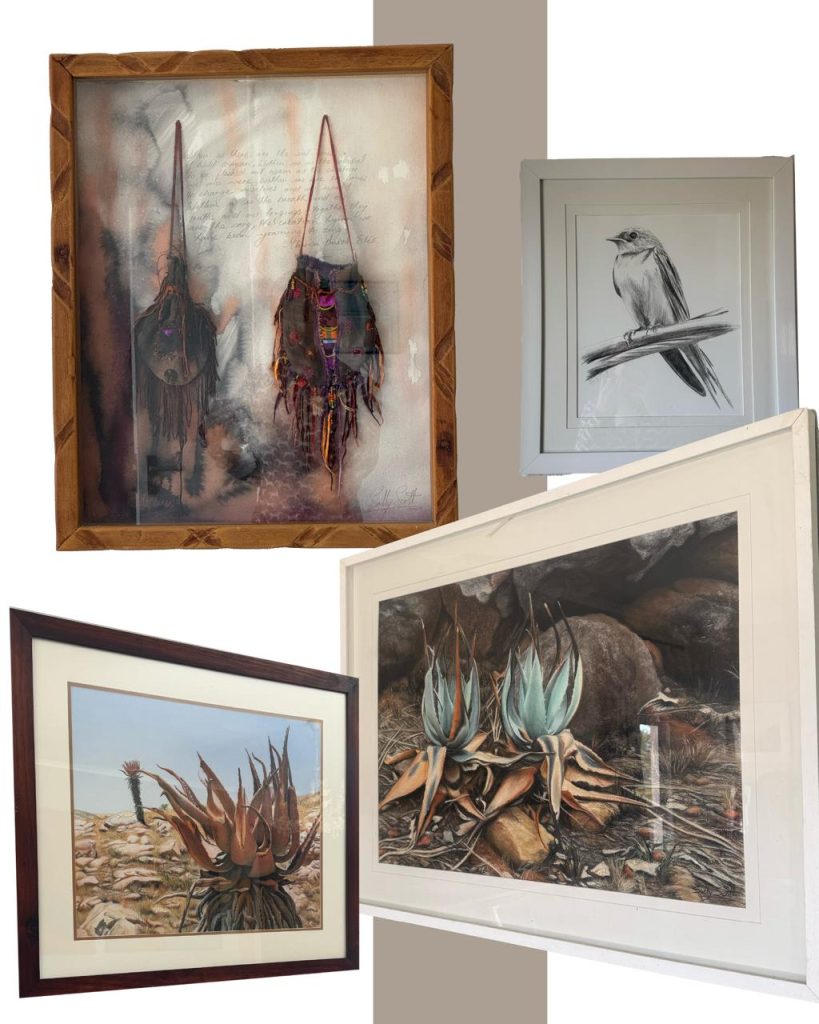
With landscape drawing and painting, first I go to the place I intend to draw, absorb the atmosphere and feel the spirit if the place, being particularly aware of the quality of light and shadow. I do quick sketches and then return to the studio. I look through the images to see which ones best capture the memory I have of the area, then I adjust the size and format for maximum impact and print off the source material. I work on good quality 50% cotton Hannemuhler paper, tape off the edges, attach it to a board and then set about sketching the composition, using a soft chalk pastel crayon. I block off areas of colour, building up the broadest areas first, gradually moving towards detail.
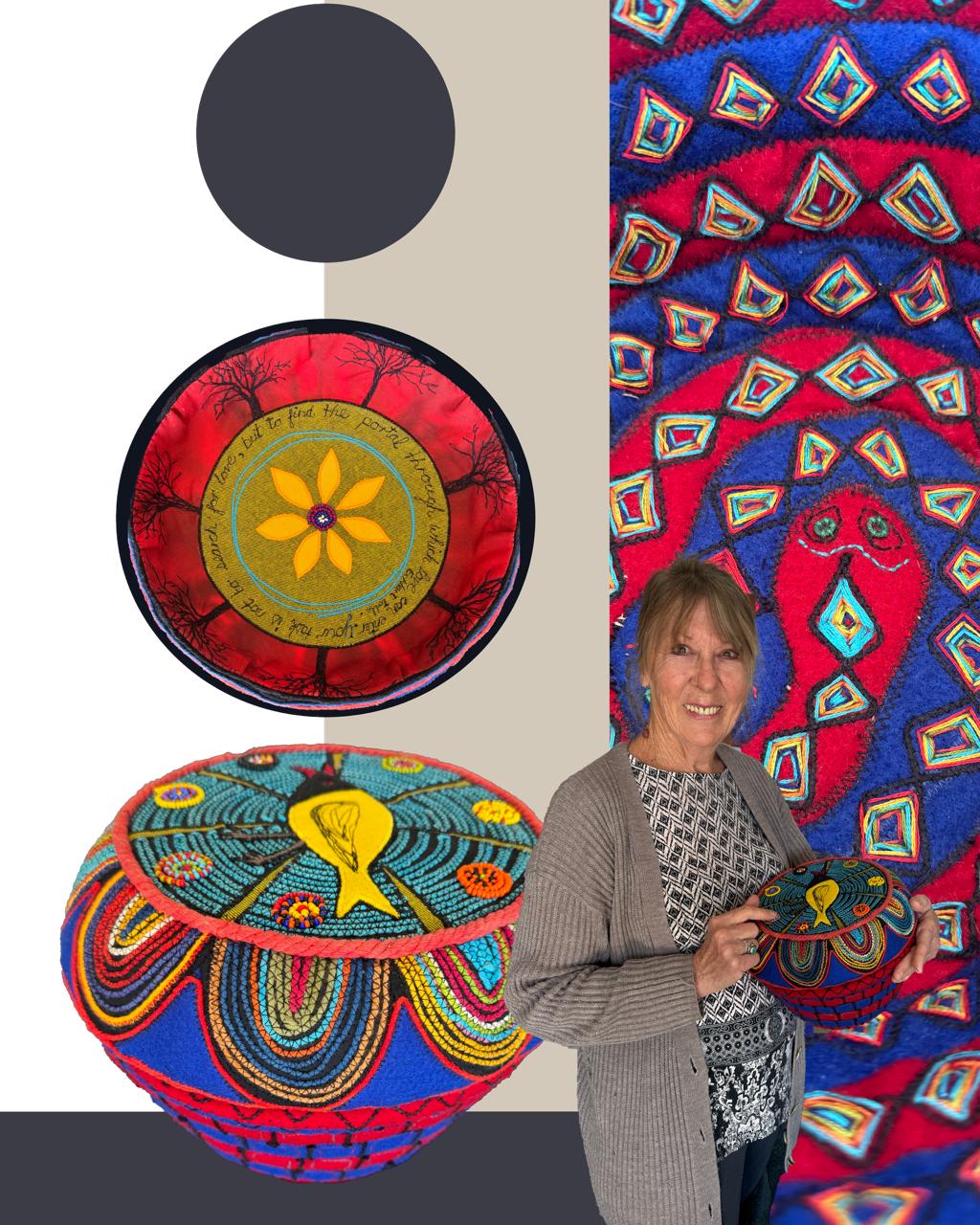
The process for Fibre Art and textiles is different. I usually begin with a challenge of some sort; an exhibition title, a theme or a concept I wish to convey. I begin by working in my art journal/sketchbook, jotting down ideas and scribbling small ink drawings that help me to visualise the structure. I usually annotate these drawings, adding extracts of prose and poetry or insights that arise as the ideas develop. This is often where the ‘layers of meaning’ arise. I see connections between my life and the ideas that are emerging.
From here, I think about materials and move instinctively towards my fabric stash and drawers full of beads and trims. I dump my initial selection on the table and sit with them for a while, moving them around to engage with the conversations that are struck up between the different colours and textures. I may need to make some of my own materials or dye fabrics to the colours I need. I love this process and gain great satisfaction watching the pieces of coloured cloth flapping in the breeze as they hang on the washing line. I usually attach small fabric swatches into the journal to give me a sense of where I am going. Most importantly, for a project to succeed, there has to be an inner/outer resonance.
Something about the shapes, colours and textures needs to excite me in order for me to proceed. From here, I start tearing or cutting the fabrics and pinning them to my pin board and after much sitting, looking, juggling colours and shapes around, the form starts to emerge and that’s when the stitching begins.

What role does failure or a “failed” project play in your creative growth?
I don’t like ‘failed’ projects and will usually keep working at them until they ‘succeed’. I may need to give them space, by walking away and returning a day or two later, looking again through fresh eyes. I find if I am too close, I lose perspective and need to create some distance in which to breathe and find my way through it. If I sense the project or artwork has lost steam and isn’t going anywhere, I accept it and clear it away. To see it constantly in my space would irritate me and drag me down. I will pretty soon start again or develop a new idea. I don’t dwell on the projects that haven’t succeeded and occasionally, with time and space, might give them another chance, coming at them with fresh ideas and with a different energy. If they still don’t work, I chop them up and incorporate them into something else.
Are there any specific tools, materials, or even rituals that are essential to your work?
For my fibre art: sewing machine, lots of different colour fabrics, dyes, threads, embroidery threads and beads. A stash of ‘found’ objects can stimulate new ideas.
Paintings: Good quality paper, chalk pastel sticks, smudging tools, putty rubber and pencils
Art Journaling: Journal, paints, inks, glue, gesso, brushes, papers, images, text
I like my table clear and studio to be clean. Good light, peace and quiet or gentle music, depending upon what I am doing. I love my pin board where I can put inspiring things up and look at them throughout the day.
In what ways do you use your platform or your art to advocate for other women or causes you believe in?
I advocate for women all the time. Through my classes, workshops and retreats. All my workshops are based on building up others, helping them to find their voice and believe that they are worthy of love and self-expression. To share the joy of creativity with others, lighting the path and giving them courage to try new things. I know from personal experience what a healing, joyful and empowering path it will be.
What does “success” mean to you now, and has that definition changed over your career?
I don’t really know what success meant to me in my early years, but over time, as fulfilment grew, I realised that success lies in living an authentic life, using the gifts I have been given to uplift and inspire others, and in so doing spreading the light and passing inspiration on. Looking at my life right now, I feel tremendous gratitude for all that I have; a loving family, wonderful friends, a home, an art studio overlooking the most gorgeous country view. I have space, air, light, nature and freedom and am able to sleep well at night knowing I am ‘home’. I am truly living the dream where my life and my art are one. This to me is success.